What did I learn this semesters? Well, there was so much, so I'm just going to sum up what comes into mind. Well I learn how to work with Microsoft word, excel, and powerpoint again. With words I actually relearn how to work with the "fronts", and the "charts." With excel I relearn how to get the charts , make one, and with the help of a book or USB it make things easier. Powerpoint, as I remember we didn't did much with it, so I really couldn't tell you what I learn. Work comes with experience, and that is what I gain in computer fundamental.
These skill, I can apply myself with working with Microsoft produces, or working with a computer by that I mean setting one up, putting it together, and taking it apart. For a long term goal, I don't think I will go far with it, because I don't plan to work with this for my future, just for a part time career, I guess. These skills would or won't achieve my long term goals. Technology is important for any career, because now in these days everything is process with technology. Either it's shipping an item online, while processing it, or writing a book. Technology is what we depend on, lets take wall street for example, it has bunch for computer for a reason, why? Well because it's used to keep track on money on company, how much coming in or out. Technology is important for any career anyone is pursing, is because we use it for keeping tabs, reports, processing, writing, designing.
What other skill would I learn in the immediate future? Well there are so much, but the one I most interested in is making and designing my own game. Or visual design, working with photoshop would be great, I get to design my own art, that would be really nice. The academy major I would follow for the rest of my high school career is programing. I enjoy programing things on the computer for a long time, but the problem was, I wasn't that good at it. So I would like to improve my programing skills, and apply to the rest that I know.
Friday, January 21, 2011

Wednesday, January 19, 2011
My Future
What do I what to do after high school?
Becoming an author (3 colleges)
Columbia University requirement:
Average high school GPA: 3.8
SAT Critical Reading: 660 / 760
Math: 670 / 780
Writing: 660 / 750
Bennington College requirement:
New York University requirement:
Become an game developer (3 colleges)
Westwood College requirement:
Devry University requirement:
Becoming an author (3 colleges)
Columbia University requirement:
Average high school GPA: 3.8
SAT Critical Reading: 660 / 760
Math: 670 / 780
Writing: 660 / 750
Bennington College requirement:
- Timely registration of their position with the FWT Office.
- Completing at least 210 total hours of work between specified dates in January and February. Students may split their time between multiple positions as agreed upon by employers.
- Writing a reflective essay.
New York University requirement:
- Application for Admission to Undergraduate Study and nonrefundable $65.00 application fee ($75.00 for applicants outside the U.S.)
- Official high school transcript (and Equivalency Diploma test scores if applicable)
- Official transcripts of all college work for which academic credit has been earned
- Official score reports for the SAT from the College Entrance Examination Board or the ACT (with Writing Test) from the American College Test Assessment Program
- Official score reports from two SAT Subject Test. Required from all students except those applying for any of the programs in Tisch School of the Arts or for the studio art or any of the music programs in the Steinhardt School of Education. (Note: Students applying for programs in the Steinhardt School that do not require an audition or portfolio ARE required to submit scores from two SAT Subject Tests.)
- High School Report/Counselor Recommendation Form
- Teacher Recommendation Form
- Personal Statements/EssayUndergraduate Statistical Form (paper version of NYU application only)
Become an game developer (3 colleges)
Westwood College requirement:
- Providing documentation of prior education
- Demonstrating proficiency in basic college-level skills
- Demonstrating English language proficiency (applicants from countries where English is not the primary language spoken and applicants whose native language is not English)
Devry University requirement:
- High School Diploma
- Interview
- Minimum GPA of 2.0, or C, on a 4.0 scale
Brown College requirement:
- Transfer Admission
- First Year Admission
Become an business man (3 colleges)
Yale University requirement:
- Sat scores 700-800
- Act Composite: 30-34
- Admission Requirements for transfers:
- High School Transcript
- College Transcript
- Essay or Personal Statement
- Standardized Test Scores
- Statement of good standing from prior institutions
- Lowest grade earned for any course that may be transferred for credit (on a 4.0 scale): 2.0
- Maximum credits/courses from 2-year institution: 18
- Maximum credits/courses from 4-year institution: 18
Harvard University requirement:
- Harvard University accepts either the Common Application or Universal College Application for prospective undergrad freshmen.
- Minimum SAT score 1400
New York University requirement:- Application for Admission to Undergraduate Study and nonrefundable $65.00 application fee ($75.00 for applicants outside the U.S.)
- Official high school transcript (and Equivalency Diploma test scores if applicable)
- Official transcripts of all college work for which academic credit has been earned
- Official score reports for the SAT from the College Entrance Examination Board or the ACT (with Writing Test) from the American College Test Assessment Program
- Official score reports from two SAT Subject Test. Required from all students except those applying for any of the programs in Tisch School of the Arts or for the studio art or any of the music programs in the Steinhardt School of Education. (Note: Students applying for programs in the Steinhardt School that do not require an audition or portfolio ARE required to submit scores from two SAT Subject Tests.)
- High School Report/Counselor Recommendation Form
- Teacher Recommendation Form
- Personal Statements/EssayUndergraduate Statistical Form (paper version of NYU application only)
Friday, January 14, 2011
IC3 Certification Exam
The Internet and Computing Core Certification program, standards based training and certification program for basic computing and Internet knowledge and skills.

Transport Layer Security (TLS)
Are cryptographic protocols that provide communications security over the Internet.
Spyware
Spyware is a type of malware that can be installed on computers, and which collects small pieces of information about users without their knowledge.

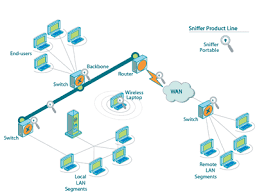
Sniffer
A computer program or a piece of computer hardware that can intercept and log traffic passing over a digital network or part of a network.
Secure Sockets Layer (SSL)
A protocol developed by Netscape for transmitting private documents via the Internet.
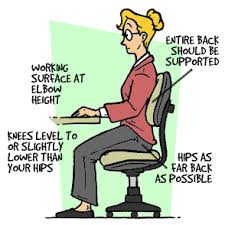
Repetitive strain Injury (RSI)
An injury that may be caused by repetitive tasks, forceful exertions, vibrations, mechanical compression, or sustained or awkward positions.
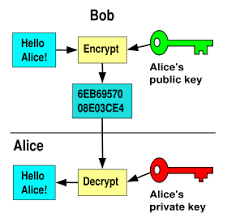
Private Key
A private or secret key is an encryption key known only to the party or parties that exchange secret messages.
Keylogger
Keylogger is a device or program that captures activities from an input device. Malicious people can make use of keyloggers to capture personal information being input into a computer system.

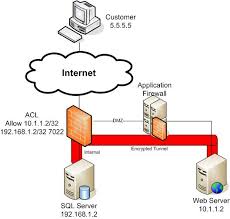
Hardware Firewall
A hardware firewall uses packet filtering to examine the header of a packet to determine its source and destination.

Hacking
The reconfiguring or reprogramming of a system to function in ways not programed by the owner, administrator, or designer.

Browser hijacking
A form of malware or spyware that replaces the existing internet browser home page, error page, or search page.

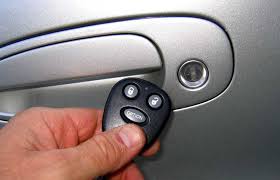
Keyless Entry System
A standard feature in vehicles that have installed alarm systems. A small battery operated device or remote hangs on the key chain and features one or more buttons for arming and disarming the alarm.
Electronic Commerce (e-commerce)
It describe business that is conducted over the Internet using any of the applications that rely on the Internet, such as e-mail, instant messaging, shopping carts, Web services, and etc.

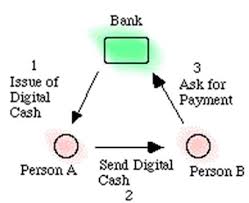
Digital Cash
A system that allows a person to pay for goods or services by transmitting a number from one computer to another.
Critical Thinking
Clarifies goals, examines assumptions, discerns hidden values, evaluates evidence, accomplishes actions, and assesses conclusions.

Wiki
A wiki is a website that allows the creation and editing of any number of interlinked web pages via a web browser.
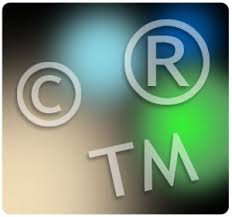
Trademark
A sign or indicator used by an individual, business organization, or other legal entity to identify that the products or services with which the trademark appears originate from a source, and to distinguish its products or services from those of other entities.
Shared bookmark
A method for Internet users to organize, store, manage and search for bookmarks of resources online.

Thursday, January 13, 2011
Search Engine
Search engines work by storing information about many web pages, which they retrieve from the html itself.

Related Search
Related Search intelligently suggests alternative search phrases, allowing the user to perform additional searches with a single click. 
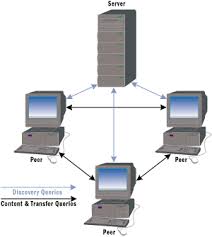
Peer-to- Peer (P2P)
Computing or networking is a distributed application architecture that partitions tasks or work loads between peers.
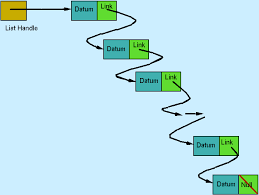
Link List
A data structure that consists of a sequence of data records such that in each record there is a fieldthat contains a reference to the next data in the sequence.
Libel
Libel is defined as the defamation of a person, business, group, product, government, or nation that is made in written or printed words or pictures.

Indexes
A data structure that improves the speed of data retrieval operations on a database table at the cost of slower writes and increased storage space.
Subscribe to:
Comments (Atom)